Avery Keller · 1 October 2026
Precipitation Patterns Reshape Salinity Gradients in Enclosed Waterfront Basins and Trigger Cascading Ecological Changes
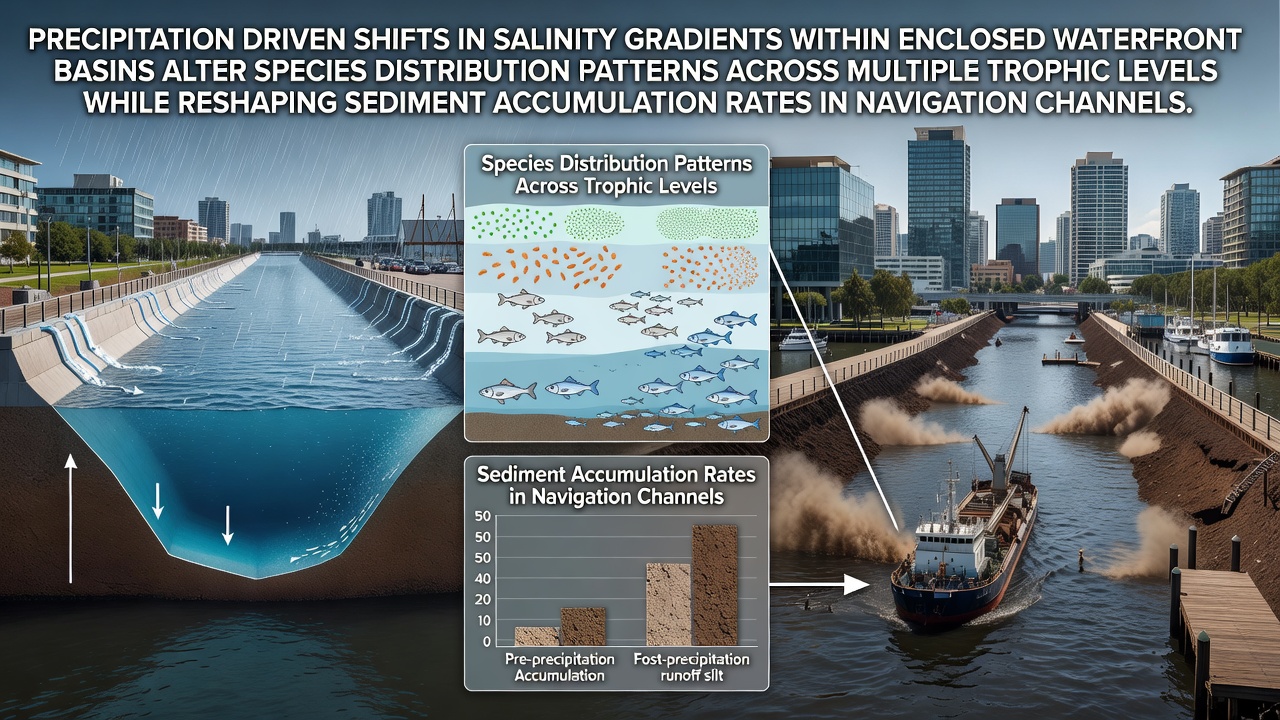
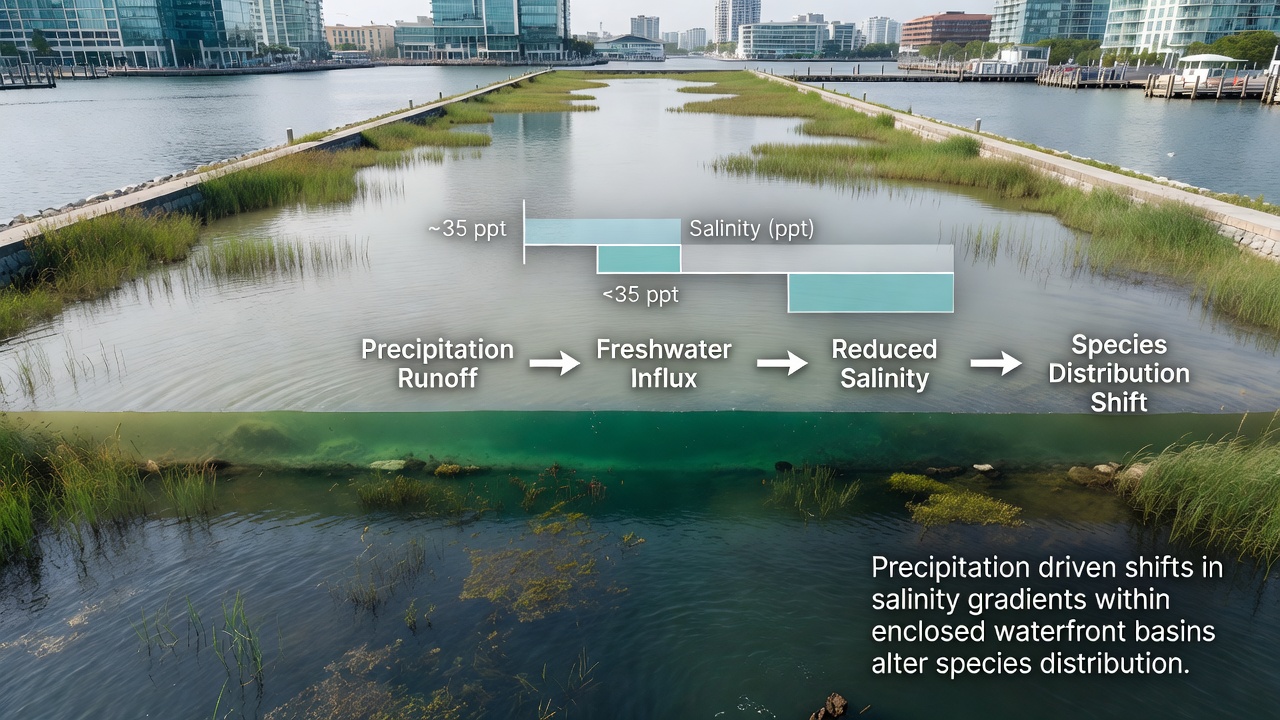
Precipitation events introduce freshwater pulses into enclosed waterfront basins where limited tidal exchange allows salinity gradients to shift rapidly and these changes propagate through food webs while altering how fine sediments settle in navigation channels. Researchers tracking these systems note that rainfall intensity and frequency determine the strength of stratification because heavier downpours create distinct low-salinity surface layers that persist for days or weeks depending on basin geometry and wind mixing.
How Freshwater Inputs Modify Salinity Structure
Enclosed basins such as marinas, harbors and dredged inlets experience reduced exchange with open coastal waters so even moderate rain events lower surface salinities by several practical salinity units within hours. Data collected by the National Oceanic and Atmospheric Administration through its coastal monitoring arrays show that basins with narrow entrances retain freshwater lenses longer than those with wider connections and this retention amplifies vertical gradients that separate surface and bottom waters. When rainfall totals exceed seasonal norms the halocline sharpens and oxygen levels in deeper layers can decline because mixing slows and organic matter decomposition accelerates.
October 2026 brought above-average precipitation across several mid-latitude coastlines and monitoring stations recorded sustained salinity drops of three to five units in multiple enclosed basins along the Atlantic seaboard and parts of the North Sea margin. These episodes demonstrated how successive storm systems compound stratification because each new influx prevents full recovery of the prior salinity profile.
Shifts in Species Distribution Across Trophic Levels
Primary producers respond first to salinity fluctuations because many phytoplankton taxa have narrow tolerance ranges and their community composition changes as freshwater species replace marine forms during low-salinity periods. Zooplankton populations follow these shifts because their grazing preferences align with specific algal groups and fish larvae that depend on particular zooplankton species encounter altered prey fields. Observers note that mobile species such as juvenile fish and crustaceans often relocate toward higher-salinity refuges near basin entrances while sessile organisms including mussels and barnacles experience physiological stress that reduces growth rates and recruitment success.
Studies conducted by European Environment Agency scientists across Baltic Sea harbors documented how repeated freshwater pulses favored euryhaline species at the expense of strictly marine taxa and these replacements rippled upward through the food web to affect foraging patterns of predatory fish and seabirds. In basins where stratification strengthened bottom-water hypoxia further limited habitat for benthic invertebrates and the resulting decline in prey availability forced higher trophic levels to expand their foraging ranges into adjacent open waters.
Changes in Sediment Accumulation Within Navigation Channels
Freshwater inflows carry suspended sediments from surrounding watersheds and the reduced density contrast during stratification slows settling velocities so finer particles remain suspended longer before depositing on channel floors. Navigation authorities report that post-rainfall surveys frequently reveal increased siltation rates in the upper reaches of channels where flow velocities drop and the freshwater lens promotes flocculation of clay and organic matter. Over successive events these deposits narrow channel depths and require more frequent maintenance dredging to maintain safe vessel drafts.
Transport Canada hydrographic records from Pacific coast marinas indicate that years with elevated autumn rainfall coincide with measurable increases in sediment volume within approach channels and these accumulations concentrate near basin heads where tidal currents weaken. The interplay between salinity-driven density currents and sediment transport creates feedback loops because deposited material can further restrict exchange and intensify future stratification.
Integrated Management Considerations
Port operators and environmental agencies coordinate monitoring programs that combine real-time salinity sensors with periodic bathymetric surveys to anticipate both ecological and navigational consequences. Predictive models incorporate precipitation forecasts from regional meteorological services to estimate the duration and magnitude of salinity shifts and the associated sediment loads that will enter basins during upcoming wet periods. Such integrated approaches allow scheduling of maintenance activities during windows when biological impacts remain minimal and channel conditions stay within operational tolerances.
Conclusion
Precipitation continues to drive measurable changes in salinity gradients inside enclosed waterfront basins and these alterations propagate through multiple trophic levels while modifying sediment dynamics in navigation channels. Continued collection of observational data across diverse geographic regions supports refined models that help stakeholders anticipate and respond to the coupled physical and biological effects of changing rainfall regimes.